
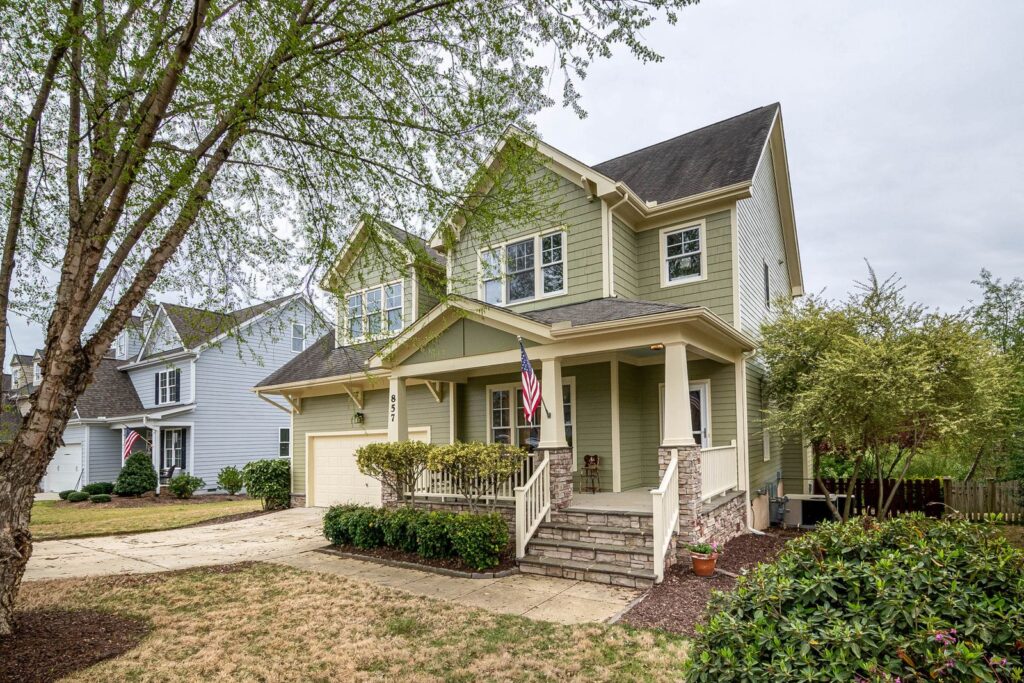
For families who have held a foothill home for decades, Proposition 13 has quietly done something valuable: it has kept the property’s assessed value, and therefore its tax bill, far below what the home would sell for today. Proposition 19, approved by California voters in 2020, changed the rules for passing that advantage to the next generation. The change is consequential, and the planning questions it raises are worth surfacing early, well before anyone signs a deed.
What follows is a plain-language orientation, not tax advice. Proposition 19 sits squarely in the domain of your CPA or tax attorney, and the figures and deadlines here can turn on details specific to your family. My role is to make sure the real estate side, valuation, timing, and titling on the property, does not undercut the strategy your advisors design.
What Proposition 13 set up
Under Proposition 13, a property’s assessed value is generally based on its value when acquired, rising only by a capped inflation factor each year rather than tracking the market. A home bought in the foothills a generation ago may carry a taxable basis a fraction of its current worth. That low basis is the thing families most want to preserve, and it is precisely what Proposition 19 reshaped.
What Proposition 19 changed for parent-to-child transfers
Before Proposition 19, a parent could transfer a home to a child and the child generally kept the parent’s low assessed value, with few strings attached, even if the child rented the home out. Proposition 19 narrowed this considerably for transfers occurring on or after February 16, 2021.
Under the current rules, the parent-child exclusion applies to a family home only when the child makes it their own principal residence, and the child must file for the homeowners’ exemption within the required window after the transfer. A transfer of a rental or second home to a child no longer qualifies for the exclusion at all. The exclusion has also become a partial benefit on higher-value homes rather than an unlimited one.
The value limit, and the figure that moves
Even where the home becomes the child’s residence, the exclusion is capped. The protected amount is the property’s existing factored base year value plus an inflation-adjusted allowance that the Board of Equalization revises every two years. For transfers between February 16, 2025 and February 15, 2027, that allowance is $1,044,586. Where the home’s market value at transfer exceeds the sum of the old basis plus that allowance, the excess is added back into the new assessed value. In other words, a very valuable foothill home can still pass with much of its tax advantage intact, but not always all of it. The arithmetic is specific, and it is exactly the kind of calculation your CPA should run before any transfer.
Moving the basis when a parent downsizes or relocates
Proposition 19 also expanded a separate benefit for homeowners who are at least 55, severely disabled, or victims of a wildfire or natural disaster. Such a homeowner can transfer the taxable base value of their principal residence to a replacement principal residence anywhere in California, and may now do so up to three times. If the replacement home is of equal or lesser value, the old basis carries over cleanly; if it is more valuable, the difference is added on under a defined formula. For a parent contemplating a move from a long-held family home, this can change the math of downsizing entirely, and it interacts with any plan to pass the original home to a child.
Property held in a trust
Many foothill homes are held in living trusts, which raises a timing question. For property in a trust, a change in ownership for tax purposes is generally treated as occurring when interests vest in someone other than the original owner, typically at the owner’s death. The date that change is deemed to occur determines which rules apply. This is one more reason that trust, estate, and tax planning belong together, and why coordinating the sale or transfer with your attorney matters.
The planning questions worth raising early
The decisions here are easy to get out of sequence. A family might transfer or sell before understanding the effect on basis, or move title and timing in an order that forfeits a benefit that careful planning would have preserved. The questions worth putting to your advisors early include: will the child actually live in the home, and can they file the exemption in time? Is the home valuable enough that part of the basis will be reassessed regardless? Would a parent be better served moving their own basis to a replacement home? And how does any of this interact with an eventual sale?
Where I fit
I do not give tax advice, and I am careful never to. What I bring is the property side your advisors need to do their work well: a clear, current valuation, an honest read of likely sale outcomes, and listing or transfer timing that fits the plan they design. When the CPA, the attorney, and the real estate work are aligned, families keep what the law allows them to keep, and avoid the costly missteps that come from acting before the picture is whole.
For the broader framework, see the cornerstone overview of Trust & Estate property sales. Families thinking a generation ahead may also want to read about passing down foothill property across generations, and those weighing a move of their own may find the piece on downsizing in San Marino and Pasadena useful.